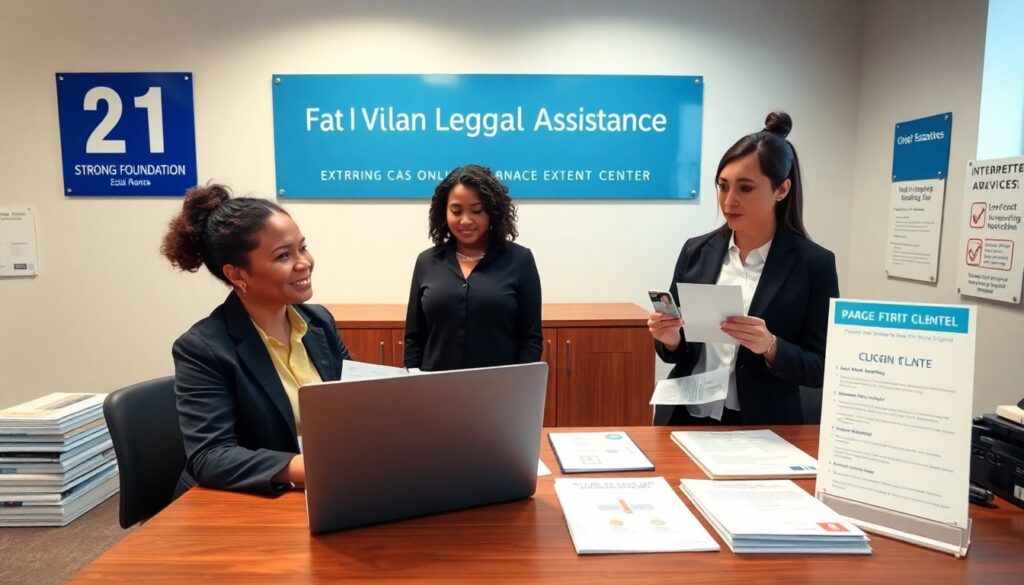
21 Strong Foundation Legal Assistance helps people find steady legal support quickly. The program offers clear services and simple eligibility rules. Readers will learn what the program covers and how they can apply. The article lists steps to prepare for the first meeting and ways to get the most from the service.
Key Takeaways
- 21 Strong Foundation Legal Assistance offers affordable core legal help for low- and moderate-income clients facing issues like landlord disputes, family law basics, and consumer debt.
- Eligibility is clear and based on income or vulnerability factors, with a streamlined intake process available online, by phone, or in person.
- Applicants should prepare key documents and a concise case summary to speed intake and maximize support during the first meeting.
- The program provides brief advice, limited representation, referrals, and self-help resources including templates and workshops to resolve small legal problems promptly.
- Clients should track their case actively, respond quickly to requests, and ask clear questions to understand options, costs, and timelines effectively.
What 21 Strong Foundation Legal Assistance Covers — Services And Eligibility
21 Strong Foundation Legal Assistance provides core legal help for low- and moderate-income clients. The program offers intake screening, brief advice, document review, limited representation, and referrals to full-service firms. It also offers assistance with landlord-tenant disputes, family law basics, consumer debt issues, benefits appeals, and simple criminal record matters. The service aims to resolve small legal problems before they grow.
Clients qualify when they meet income limits or show specific vulnerability, such as disability, age, or recent housing loss. They must provide basic ID and proof of income. Some programs require residency in a service area. Some programs prioritize urgent cases. The program uses clear eligibility criteria to speed decisions.
Staff include licensed attorneys, paralegals, and trained intake coordinators. They review cases and assign the level of help that fits each matter. The service gives brief legal advice for simple issues. It gives limited representation for negotiations and for short court appearances. It refers complex litigation to partner firms or legal aid organizations.
21 Strong Foundation Legal Assistance keeps fees low or waives them when clients meet financial guidelines. The program funds pro bono clinics and community workshops. It also provides plain-language guides and templates for common forms. It updates its scope each year to match local need and available funding. The program tracks outcomes and adjusts services when patterns emerge.
People should check whether the program covers their specific problem before applying. They should ask about possible costs, timeframes, and the exact help they will receive. The service gives clear answers about what it will and will not do.
How To Apply, Access Help, And Navigate Intake Quickly
They can apply online, by phone, or in person. The program keeps online forms short. The intake form asks for name, contact, income, and a short description of the problem. Applicants attach ID and a recent pay stub if available. The system confirms receipt and gives an estimated response time.
Applicants who call get a live intake worker or a callback within one business day. Walk-in centers offer same-day triage on limited days. The program posts hours and locations clearly on its site. It offers interpreter services for non-English speakers.
To speed intake, applicants prepare key documents before they apply. They gather IDs, bills, leases, notices, court papers, and pay records. They write a simple timeline of events. They list names and contact details for any other parties involved. This reduces follow-up and speeds the review.
During intake, coordinators ask focused questions. They confirm basic facts, check for conflicts, and assess urgency. They classify the case by legal area and severity. They assign a service level: self-help resources, brief advice, limited representation, or referral.
The program uses a clear triage algorithm. The algorithm balances urgency, impact, and limited staff time. It reserves full representation for high-impact or emergent cases. It uses clinics and volunteers for lower-risk matters. They notify applicants quickly when a decision occurs.
Applicants should track their application by email or the online portal. They should respond quickly to requests for documents. They should keep phone messages current. Quick responses reduce delays and increase the chance of timely help.
What To Prepare Before Your First Meeting And How To Maximize Support
They should prepare a short case summary before the first meeting. The summary should state the problem, name the other parties, and list important dates. They should state the outcome they want. They should keep the summary to one page.
They should bring original documents and one copy for the staff. Useful items include IDs, lease or mortgage papers, notices, contracts, court papers, pay stubs, and communication records. They should highlight the pages that matter. They should mark dates and amounts clearly.
They should prepare a short timeline of events. The timeline should list the date, action, and result. The timeline lets the attorney see the facts fast. It helps the attorney spot deadlines, like court dates or appeal windows.
They should prepare key questions. Examples include: What are my options? What will this cost? What is the likely timeline? What should I do next? They should write these questions on a single page and bring them to the meeting.
They should decide who will speak during the meeting. If someone brings a family member or friend, they should confirm that the person can join. They should sign any consent or release forms that the program requires. This avoids privacy issues and speeds work.
They should expect the attorney to suggest a clear next step. The attorney might draft a letter, file a form, negotiate, or set a follow-up. The client should note the next steps and any deadlines. They should ask for plain-language instructions and a point of contact.
They should use self-help materials when offered. The program provides templates and checklists. They should follow these templates carefully. Doing so reduces repeat work and shortens resolution time.
They should track their case in the online portal or by email. They should keep copies of everything they send. They should report any new developments right away. Quick reporting helps the team act before deadlines pass.
They should stay realistic about outcomes. The attorney will explain risks and likely results. The client should ask for a written plan if the case becomes complex. This helps everyone stay on the same page and use limited legal time well.