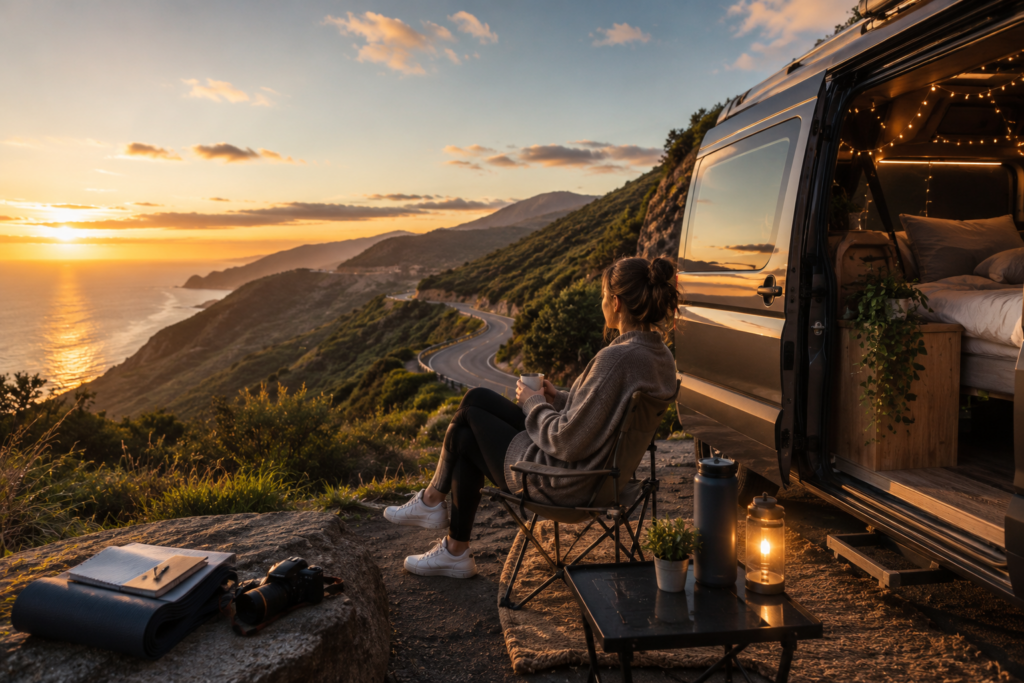
For much of the last century, the road trip represented freedom, adventure, and escape. It was often associated with speed, distance, and the excitement of reaching somewhere new. Today, however, attitudes toward travel are shifting. Increasingly, motorists are treating the journey itself as the main experience rather than simply a route to a destination.
Across the UK and beyond, road travel is becoming more closely connected with wellbeing, mindfulness, and slower forms of tourism. Scenic driving routes, campervan culture, digital detox travel, and flexible remote working have all contributed to a new kind of motoring experience — one focused less on efficiency and more on emotional value.
This shift is reshaping how people think about cars, travel, and time spent on the road.
The Rise of Slow Tourism
Modern travel has become heavily optimised. Flights, booking apps, and tightly scheduled itineraries have encouraged people to move quickly between destinations, often with little connection to the places in between.
In response, many travellers are embracing “slow tourism” — a style of travel that prioritises immersion, flexibility, and experience over speed. Road trips naturally fit this mindset because they allow travellers to engage more directly with landscapes, small towns, and regional culture.
Rather than rushing through a journey, drivers are increasingly choosing scenic coastal roads, countryside routes, and national park drives designed around relaxation and exploration.
This trend has grown particularly strongly among younger travellers and remote workers, many of whom value experiences that feel less structured and digitally saturated. The appeal is not necessarily luxury, but autonomy: the ability to travel at a personal pace without rigid schedules.
Scenic Driving as a Form of Escapism
The emotional role of driving has also evolved. For many people, driving itself has become a way to decompress from constant digital connectivity and urban routine.
Long countryside drives, mountain routes, and coastal journeys offer a level of solitude that is increasingly difficult to find in daily life. Unlike air travel or public transport, driving creates a sense of personal space and control that many motorists find calming.
This helps explain the continued popularity of iconic driving routes throughout the UK, from the North Coast 500 in Scotland to scenic sections of Wales and the Lake District. These journeys are often promoted less as traditional holidays and more as restorative experiences.
The vehicle itself has become part of that environment. Comfort, cabin design, sound systems, panoramic roofs, and even ambient lighting now influence how people experience long journeys emotionally, not just practically.
Campervan Culture Reflects Changing Priorities
One of the clearest examples of this cultural shift is the growth of campervan and van-life travel. Once viewed as a niche lifestyle, campervan culture has become increasingly mainstream among younger couples, families, and remote professionals.
Part of the appeal lies in flexibility. Travellers can move freely between locations while avoiding rigid accommodation schedules. Yet the popularity of campervan travel also reflects wider lifestyle changes.
Many people are seeking experiences that feel more self-directed and less commercialised. Travelling by campervan allows individuals to combine mobility, privacy, and outdoor living in ways traditional tourism often cannot provide.
Social media has amplified this trend considerably. Images of remote campsites, converted interiors, and scenic overnight stops have helped position campervan travel as both aspirational and emotionally restorative.
At the same time, vehicle aesthetics have become increasingly important within this culture. Owners often personalise vans and touring vehicles to reflect lifestyle and identity as much as practicality. Across the wider automotive space, companies like Plates Express reflect the broader demand for subtle vehicle personalisation among drivers who view their vehicles as an extension of personal style.
Digital Detox Travel Is Influencing Motoring Habits
Another major factor behind the modern road trip is digital fatigue. Constant notifications, social media, and remote working have blurred the boundaries between work and personal time for many people.
As a result, travellers are increasingly seeking journeys that encourage partial disconnection. Driving holidays often provide exactly that balance: enough connectivity for navigation and convenience, while still allowing meaningful separation from everyday routines.
This is especially visible in rural travel trends. Areas with natural landscapes, limited distractions, and quieter roads have become more attractive to travellers prioritising mental wellbeing and slower experiences.
Interestingly, technology still plays a role in enabling these trips. Route-planning apps, EV charging networks, and connected navigation systems make long-distance travel easier and more accessible. However, the purpose of that technology has shifted. Rather than increasing speed and productivity, it often supports more relaxed and flexible travel experiences.
Cars Are Becoming Lifestyle Spaces
The evolution of road-trip culture is also influencing vehicle design itself. Manufacturers increasingly market cars around comfort, experience, and lifestyle integration rather than pure performance.
SUVs, crossovers, and electric touring vehicles are often designed with travel-oriented features such as modular interiors, expanded storage, advanced driver assistance systems, and integrated entertainment technology.
Electric vehicles are contributing to this shift in unexpected ways. Charging stops naturally encourage slower travel patterns, giving drivers more reason to spend time exploring destinations along the route rather than rushing through them.
For some motorists, the quieter driving experience offered by EVs also changes the emotional feel of long journeys. Reduced cabin noise and smoother acceleration can create a calmer environment that aligns closely with wellness-focused travel.
The Emotional Future of Motoring
Road trips have always carried emotional significance, but modern travel habits are changing what people seek from those experiences.
Today’s motorists are increasingly prioritising flexibility, calmness, scenery, and personal wellbeing alongside practicality. Cars are no longer viewed purely as transport tools; they are becoming part of how people disconnect, recharge, and experience freedom.
This shift is influencing everything from vehicle design to tourism trends and automotive culture more broadly. Scenic travel, campervan lifestyles, and slow tourism are not simply passing trends — they reflect deeper changes in how people want to spend their time.
As modern life becomes more digitally intensive and fast-paced, the appeal of slower, more intentional journeys is likely to grow further. In that environment, the road trip is evolving from a traditional holiday into something more personal: a form of emotional escape shaped by movement, independence, and the experience of the journey itself.