Railway networks carry millions of passengers and tons of freight every day. A single track defect, failed signal, or broken bridge can cause delays, accidents, and huge repair costs. That is why railway operators are turning to AI-powered monitoring platforms that catch problems before they become disasters.
Here are the 6 best AI railway infrastructure monitoring solutions in 2026.
Why AI Monitoring Matters in 2026
Railway infrastructure is aging faster than it can be replaced. In the US, the average bridge is 47 years old, approaching or past its 50-year design lifespan, according to the ASCE 2025 Infrastructure Report Card. In Europe, many mainline tracks were built in the mid-20th century and were never designed for today’s train speeds or passenger volumes.
Traditional inspection methods, such as walking the track, manual checks, and periodic surveys, are too slow and too infrequent to catch problems early enough.
AI monitoring changes that. It watches every asset continuously, spots patterns that human inspectors would miss, and flags faults days or weeks before they cause a failure. The result is fewer emergency closures, lower repair costs, and safer journeys for passengers and freight.
Side-by-Side Comparison
|
Platform |
Best For |
Main Strength |
|
One Big Circle (AIVR) |
UK mainline operators |
Remote video inspection, 95% UK network coverage |
|
Trimble (T4D Rail / GEDO) |
Track geometry teams |
Automated track geometry monitoring and surveying |
|
Plasser & Theurer (EM-Series / InfraSpector) |
Heavy rail and metro |
Track geometry recording, measurement as a service |
|
Siemens Railigent X |
Metro/urban rail |
Systems and station monitoring |
|
Wabtec KinetiX |
Freight rail |
Wayside detection, rolling stock health |
|
Hitachi Rail HMAX |
Large national operators |
AI asset management, NVIDIA-powered |
1. OneBigCircle
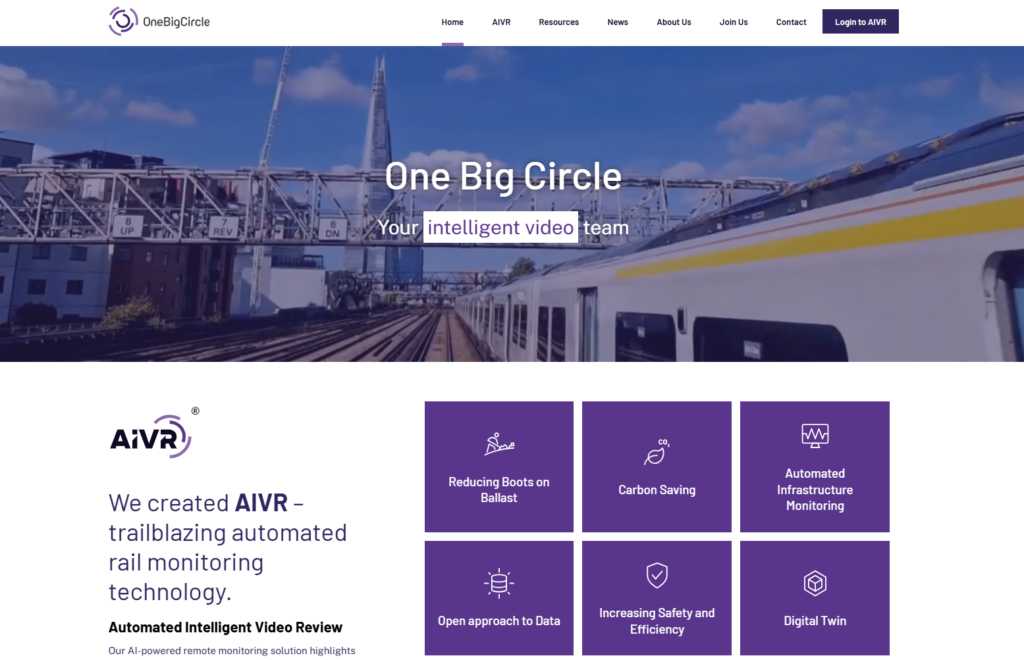
One Big Circle is a UK rail technology company founded in 2017 and based in Bristol. Their product, AIVR (Automated Intelligent Video Review), is a multi-award-winning AI-assisted remote monitoring solution deployed across more than 95% of the UK mainline rail network and trusted by over 12,000 rail professionals.
What it monitors:
- Track geometry and rail surface condition
- Switches and crossings (S&C) condition
- Overhead line and conductor rail (via thermal cameras)
- Lineside assets, cables, and troughing
- Track joints and rail head defects
- Lineside environment and structures
Key features:
- High-resolution video and thermal cameras fitted to in-service trains capture data continuously
- AI automatically flags priority defects and hotspots for engineer review
- Browser-based platform, no software download needed, accessible from anywhere
- Over 2 million miles of national video data are stored on the platform
- Each hour spent reviewing data replaces an estimated 8-hour on-site visit
- Annotate, measure, and share findings directly within the platform
- Integrates with Network Rail systems and other asset management workflows
- Estimated to generate over £50 million in annual savings across the industry
Why it ranks first: One Big Circle is the most widely deployed AI rail inspection platform in the UK, covering the vast majority of the national network. Its AIVR system has a strong proven track record with Network Rail and dozens of train operators, and moves teams from reactive maintenance to planned, condition-based work.
Best for: UK mainline operators, Network Rail supply chain, infrastructure managers
2. Trimble
Trimble is a US technology company with a dedicated rail division offering several products for track geometry monitoring, surveying, and asset management. Their two main tools for infrastructure monitoring are Trimble 4D Control Rail (T4D Rail) for continuous track geometry monitoring and Trimble GEDO for track surveying and as-built data capture.
What it monitors:
- Track alignment and cross-level
- Rail surface defects (corrugation, head checks, squats)
- Sleeper/tie condition
- Switch and crossing geometry
Key features:
- Collects data from track geometry cars and handheld devices
- AI flags which defects need urgent repair vs. routine maintenance
- Automated work order generation linked to maintenance teams
- GIS mapping of all defects by location and severity
- Historical trend analysis to track asset degradation over time
Best for: Track geometry teams, survey engineers, and infrastructure managers needing automated monitoring during construction or near live lines
3. Plasser & Theurer
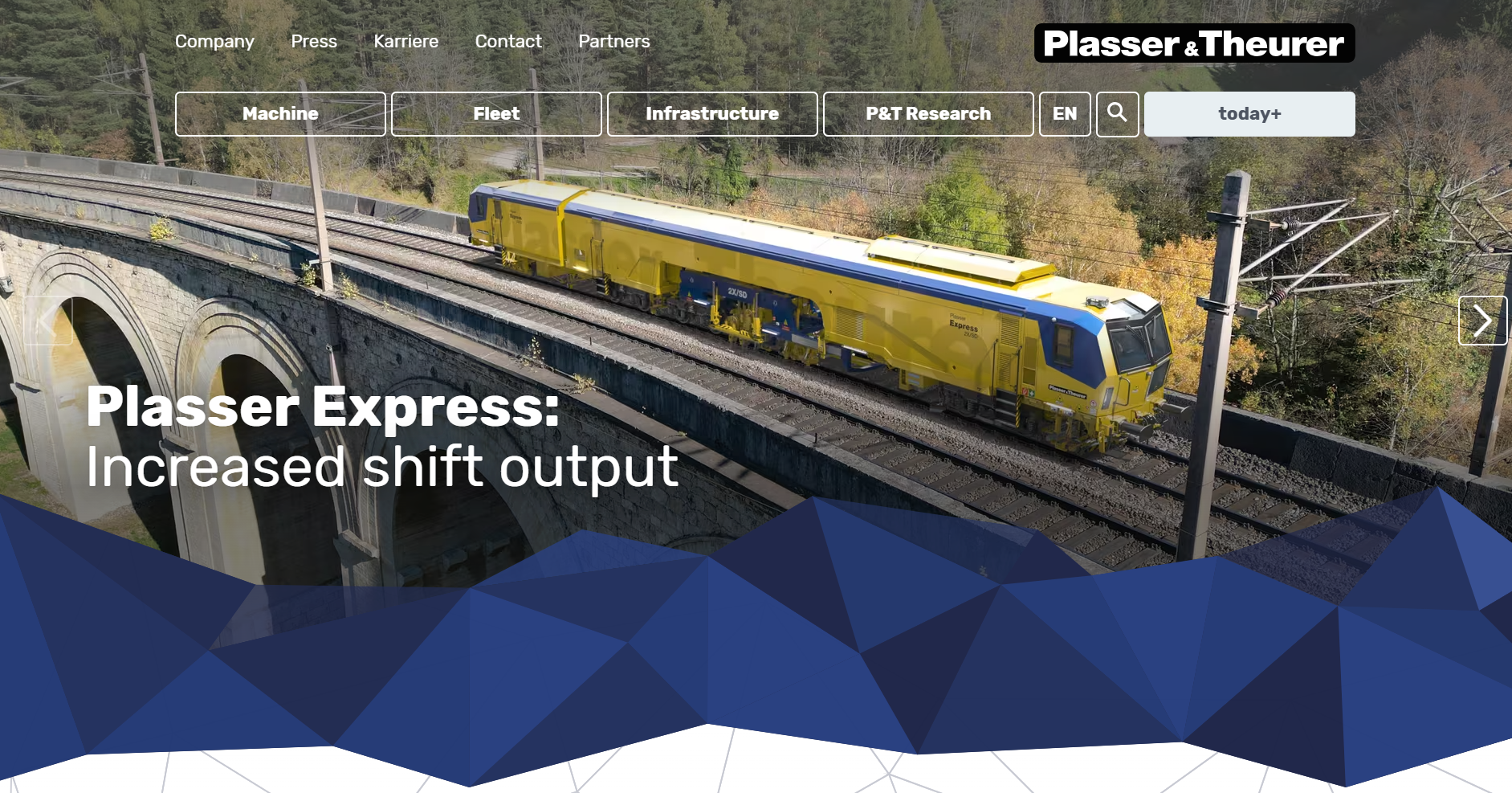
Plasser & Theurer is an Austrian manufacturer and the global market leader in track maintenance and inspection machinery, founded in 1953. Their inspection products include the EM-series track geometry recording cars and the InfraSpector, a road-rail inspection vehicle launched at InnoTrans 2024 for metro, tram, and local railway operators.
What it monitors:
- Track geometry (level, alignment, gauge, cross-level, twist)
- Rail profile and rail head wear
- Ballast profile and track stiffness
- Overhead contact line position and clearance
- Tunnel clearance gauge via rotary laser (InfraScan system)
Key features:
- Non-contact laser and sensor measurement at operational train speeds
- An inertial navigation system allows geometry measurement without a dedicated measuring train
- Data is fed into maintenance planning systems for condition-based work scheduling
- InfraSpector operates at up to 60 km/h and works inside tunnels
- Measurement as a Service option: Plasser runs inspection campaigns on behalf of operators
- Results used directly as the basis for tamping and track renewal planning
Best for: Heavy rail infrastructure managers, metro and tram operators, track maintenance contractors
4. Siemens Railigent X
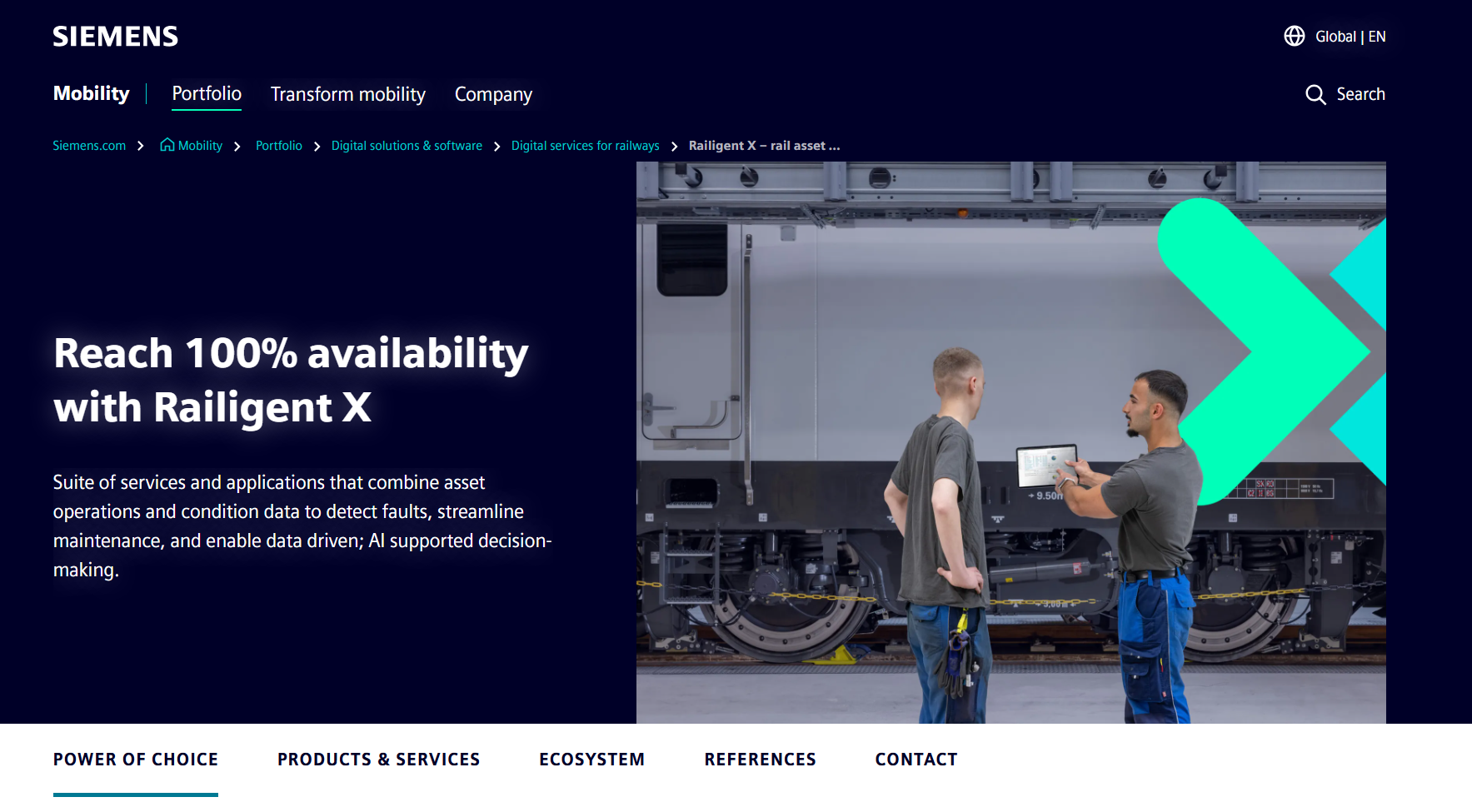
Railigent X is Siemens’ industrial IoT and AI platform adapted for railways. It focuses heavily on systems, trains, stations, and signalling infrastructure rather than just the track.
What it monitors:
- Traction power and electrification systems
- Point machines and interlocking equipment
- HVAC and escalators in stations
- Tunnel ventilation and fire detection systems
Key features:
- Connects thousands of IoT sensors across the network
- AI detects patterns that predict equipment failure weeks in advance
- Live energy consumption monitoring to reduce operating costs
- Open API so operators can plug in data from any sensor brand
- Cloud-based or on-premise deployment options
Best for: Metro systems, urban rail, station, and depot operators
5. Wabtec KinetiX
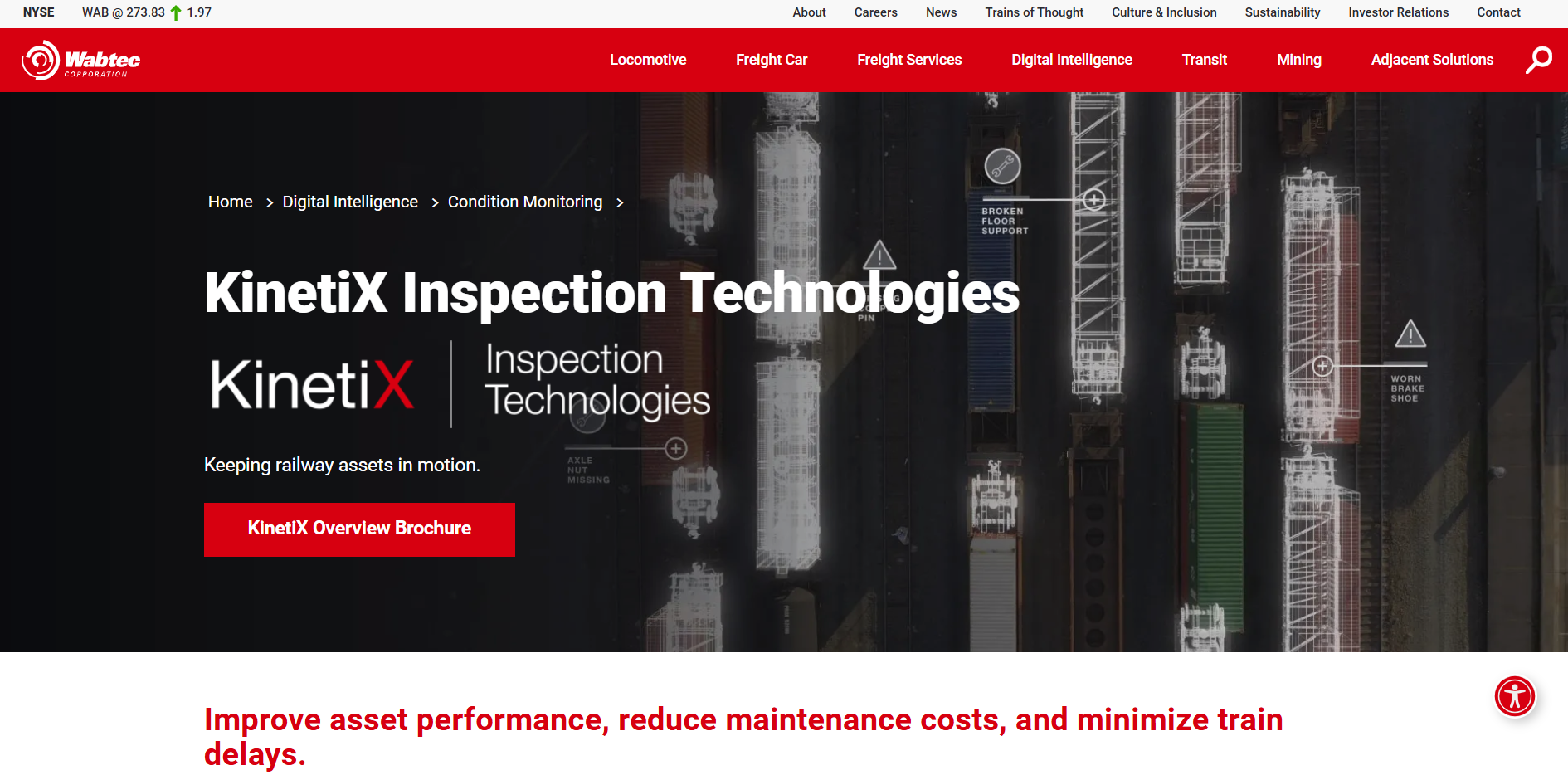
Wabtec’s KinetiX Inspection Technologies is an automated wayside monitoring system used across freight, heavy-haul, and transit rail. It is one of the most widely deployed AI inspection platforms in the industry.
What it monitors:
- Wayside detector systems (hotbox, dragging equipment, wheel impact)
- Track circuit health
- Brake and wheel condition of passing trains (using trackside sensors)
- Crossing gate and signal health
Key features:
- Processes data from millions of train passes per year
- AI identifies failing wheels and overheated bearings before they cause derailments
- Push notifications to control centres within seconds of detecting a fault
- Cloud dashboard accessible from any device
- Integration with Wabtec’s fleet management tools
Best for: Freight operators, mixed freight/passenger networks
6. Hitachi Rail HMAX
HMAX is Hitachi Rail’s AI-powered digital asset management platform, developed in collaboration with NVIDIA and unveiled at InnoTrans 2024. It is built for large, complex rail networks that need to manage many asset types in one place.
What it monitors:
- Rolling stock condition and component health
- Trackside and wayside infrastructure
- Station systems and equipment
- Network-wide asset performance trends
Key features:
- Built on NVIDIA AI technology for fast processing of large sensor datasets
- Predicts asset failures before they happen using historical and live data
- Single dashboard covering trains, tracks, and stations together
- Automated maintenance alerts sent directly to field teams
- Scales easily across large national networks
- Designed to work alongside existing infrastructure management systems
Best for: Large national operators, networks running mixed passenger and freight services
Closing Thoughts
Ask yourself these four questions before buying:
- What assets do you need to monitor? Track only, or also bridges, tunnels, stations, and systems?
- Do you already have sensors and inspection vehicles? Some platforms work with what you have. Others require new hardware.
- How big is your network? Large multi-site operators need a broad platform like Hitachi HMAX or Siemens Railigent X. Focused track teams are better served by specialist tools like Plasser & Theurer.
- What is your biggest risk? Derailment prevention points to track and wayside tools. Cost reduction points to predictive maintenance platforms.
For UK operators and Network Rail supply chain teams, One Big Circle is the clear starting point. For those with specific needs like autonomous inspection, AI-powered asset management, or enterprise IT integration, the specialist tools listed above are worth a closer look.