Unexpected accidents don’t wait for paramedics to arrive. When you understand basic first aid and CPR, you actively protect your family, friends, and community. Discover why grassroots medical preparedness saves lives and how modern, flexible training makes getting certified easier than ever for busy parents and volunteers.
Volunteering at a local charity walk or watching your kids play at the neighborhood park feels like the safest thing in the world. We surround ourselves with community to feel secure. But accidents rarely give us a warning. A sudden bad fall, a severe allergic reaction, or a terrifying choking scare can flip a perfectly normal afternoon upside down in mere seconds.
When panic suddenly sets in, do you actually know what to do next? Most people just freeze and desperately hope someone else will step up. That is exactly why enrolling in First Aid training NS is such a smart, caring decision. Taking a proper safety course gives you the quiet confidence to take charge, stabilize an injured person, and keep them safe until the ambulance arrives. You become the safety net your community needs.
What Are the Most Common Risks During Community Events?
Whenever you gather a large group of people—especially kids and the elderly—unique risks naturally pop up. Dehydration and heat exhaustion are incredibly common during summer festivals or outdoor charity runs. If you miss the early warning signs, a simple case of overheating can quickly escalate into a dangerous heat stroke.
Then there are the physical injuries. Kids running around uneven fields often suffer sprained ankles or deep scrapes. Food tents introduce the quiet threat of severe allergic reactions, where an accidental peanut exposure can swell a child’s airway shut in minutes. Knowing how to correctly administer an EpiPen or bandage a deep laceration turns a potential tragedy into a manageable situation.
How Does Fast Action Actually Change the Outcome?
Time is your biggest enemy during a severe medical event. If a community member suffers sudden cardiac arrest, their heart stops pumping oxygen to their brain. Even if you call 911 immediately, an ambulance still has to navigate through traffic and crowds to reach you.
Every single minute without oxygen lowers their chance of survival drastically. You simply can’t afford to just stand there. By stepping in and performing proper chest compressions right away, you manually pump that vital oxygen to their brain. You are the critical bridge that keeps them alive during those terrifying minutes before professional paramedics take over with advanced equipment.
Why Is Blended Learning the Best Fit for Busy Families?
We often put off safety classes because our schedules are already overflowing. Between school drop-offs, work commitments, and volunteer hours, spending an entire weekend trapped in a dull classroom sounds exhausting. I completely get it.
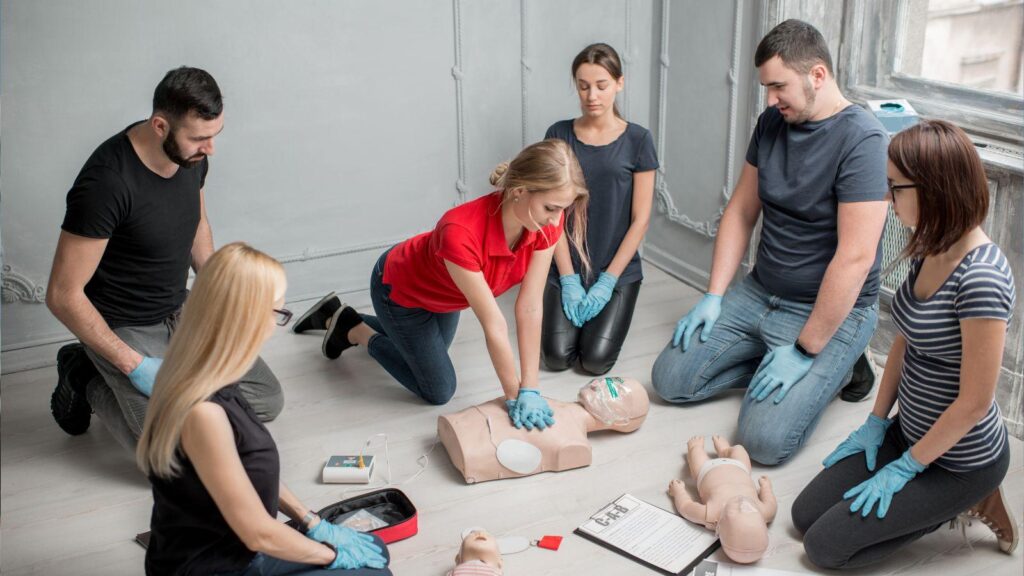
Thankfully, the way we get certified has changed for the better. A Blended Learning format is highly convenient for busy people. You tackle the theoretical modules online from your own couch, working at your own pace. Maybe you finish a few chapters after the kids finally go to bed. Once the digital coursework is done, you just attend a brief, hands-on practice session. You get to practice on professional mannequins under the guidance of an expert, ensuring your muscle memory is sharp and ready.
If you are looking for first aid training near Downtown Halifax, the busy Spring Garden Road district, or other areas close to our facility, then you may reach out to Coast2Coast First Aid/CPR – Halifax in that area. For more info and articles like this visit: https://www.c2cfirstaidaquatics.com/
Frequently Asked Questions
Do I need a medical background to take a CPR class? Not at all. Standard first aid and CPR courses are designed specifically for everyday people. The techniques are taught in simple, easy-to-remember steps so anyone can learn how to save a life, regardless of their background.
What is the difference between adult and child CPR? While the basic concept is the same, the physical technique changes. Adults require deep, two-handed chest compressions. Children and infants require modified hand placement and much less force to avoid injuring their smaller, more fragile ribs.
How often do I need to renew my first aid certification? Standard certifications typically expire after three years. However, medical guidelines can update, and muscle memory fades over time. Taking a short refresher course annually is a fantastic way to keep your skills sharp.
Is it safe to use an AED on someone if I have never been trained? Yes. Modern Automated External Defibrillators are built for bystanders. The machine provides clear, step-by-step voice prompts telling you exactly what to do. It will also refuse to deliver a shock unless it detects a specific, shockable heart rhythm, meaning you cannot accidentally hurt the person.
Are Blended Learning courses approved by workplace safety boards? Yes, our courses are fully WSIB and OHS approved. This means the training meets strict national standards and can be used to satisfy workplace safety requirements, not just community volunteering needs.