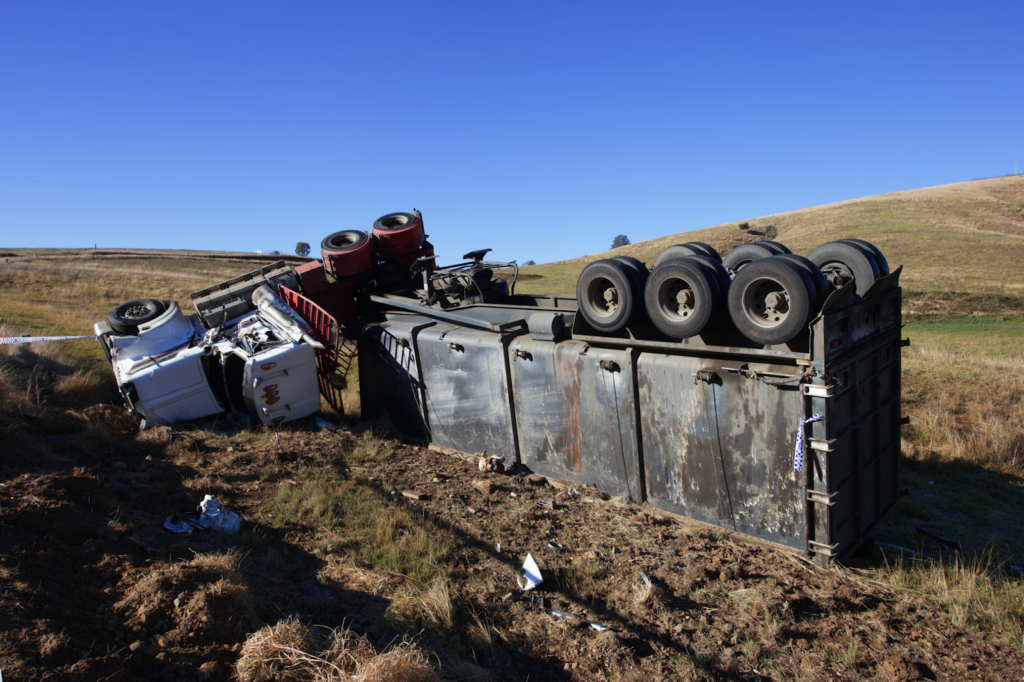
A trucking accident never kills just one person.
Your loved one may be gone, but you are now faced with a myriad of questions — and a truck crash case that’s answerable only with justice.
How justice is defined, however, is unique to every trucking accident case.
Trucking wrongful death claims involve more defendants. They rely on more complex evidence. And there are legal pitfalls that can catch families completely off guard.
All of which brings us to today’s topic…
Contributory negligence, wrongful death.
You’ll Learn:
- How trucking wrongful death claims are unique
- How contributory negligence applies to a truck crash
- Who can actually file a wrongful death claim
- What compensation families can recover
- The evidence that matters most in these cases
Why Trucking Wrongful Death Claims Are Different Than Car Accidents
Trucks aren’t cars…and truck accidents are far more likely to be fatal.
Traffic fatalities nationwide have been trending dangerously high, and crashes involving big rigs are a big reason why. Over 5,400 Americans died in large truck crashes in 2023 — and more than half of those people were killed in crashes where someone else’s car crashed into the truck.
This reality changes everything.
Due to weight imbalances and other factors, collisions between trucks and passenger vehicles are overwhelmingly more harmful to car occupants.
Which means truck crash cases are inherently more complex. There is typically more than one defendant, including:
- The truck driver
- The trucking company itself
- Any companies responsible for loading cargo
- The truck manufacturer
- Third-party vehicle maintenance providers
How Does Contributory Negligence Apply in a Truck Crash?
Alright, here’s the thing. One of those defendants could be your loved one.
Yes, even after they’re killed, your family member could be blamed for a crash…and used as a reason to deny your family the justice you deserve.
Welcome to contributory negligence.
If someone dies in a Virginia crash, their “contributory negligence” can be examined — and used against your family in court.
In Virginia, if any percentage of fault can be placed on the person who died, then the entire claim can be denied. Period.
Hear that? Even 1% negligence on the part of your loved one could derail an otherwise valid claim.
That’s why your truck crash case needs experienced legal guidance immediately after the crash. Your first stop should always be https://www.smithlawcenter.com/practice-areas/virginia-trucking-accident-lawyers to learn more about contributory negligence in truck crashes, and how Virginia’s strict rules might impact your case.
Virginia is one of only five states in America that still adhere to this pure contributory negligence standard. Trucking companies know it too — which is why you’ll hear these arguments over and over in defense:
Your loved one:
- Was speeding
- Switched lanes without signaling
- Was following too closely
- Failed to “avoid” the crash, could have braked harder, etc.
These are all ways the defense can try to place partial blame on your loved one. And they won’t stop at anything to get that 1% fault recognized by the court.
Who is Eligible to File a Wrongful Death Claim?
Here’s where it gets even more technical…
In Virginia, wrongful death claims must be brought by the personal representative of the victim’s estate.
Essentially, whoever the court appoints to administer the estate will be tasked with filing the wrongful death lawsuit. Any compensation recovered goes first into the deceased’s estate, and is then distributed to the decedent’s beneficiaries by strict statutory formula.
Who qualifies as a beneficiary? Usually…
- A surviving spouse and/or children
- Parents and siblings (if no spouse or children survive)
- Any other relatives who were financially dependent on the deceased
Keep in mind these rules only apply if the case is filed within two years of the person’s death. In Virginia, that two year window is a hard deadline.
Don’t let your family’s right to recovery expire due to inaction.
What Compensation Can Families Recover?
Finally getting to the part that matters most to families…
Because of how deadly trucking accidents can be, there’s potential to recover substantial compensation, including:
- Medical bills from the deceased’s final injury
- Funeral expenses
- Lost wages the deceased would have earned (potentially over decades)
- Loss of care, advice, protection, companionship, etc.
- Mental anguish and grief
When you factor in both economic losses (like medical bills and lost income) and non-economic impacts like mental anguish, truck crashes can carry estimated damages well into the millions.
Average fatal truck crashes come in around $7.2 million when all losses are considered together.
This matters because it’s easy to lose sight of the larger purpose behind your truck crash claim. It’s not about pinning blame or wiping your hands on the trucking industry. It’s about securing what your family lost when someone else was given free reign behind the wheel.
Evidence You’ll Need for Your Case
Read this section carefully.
Once a trucking accident occurs, the company will be required by law to preserve certain types of evidence.
But they only have to store that evidence for a limited amount of time.
That means if your case is delayed or stalls, a trucking company can legally delete:
- The truck’s ECM data (aka the black box)
- Driver logs that prove hours of service violations
- Maintenance records
- Cargo loading information
- Anything else that could potentially be damaging to their insurance company
Grabbing this evidence quickly helps ensure everything needed to prove another party was more than 100% responsible for the fatal crash stays on the record.
Key Takeaways for Families After a Trucking Accident
That’s a lot to cover, but here are three things to walk away with:
Build your case quickly.
A truck company’s window for deleting incriminating evidence isn’t an eternity. Work with a qualified attorney now to preserve evidence before it’s too late.
Virginia is a pure contributory negligence state.
Anyone can tell you that. But what may not be immediately obvious is how aggressively truck companies will argue your loved one was partially to blame. Be ready to defend your loved one’s memory.
Know who can file, and who benefits from a recovery.
When hiring a lawyer, make sure they understand who can properly file a wrongful death claim on your behalf. It’s also good to know who benefits if you win — especially if there are unexpected people or families who might make a claim on any recovery.
Nobody expects to navigate a wrongful death claim. It’s a heartbreaking situation that no family should ever face. But understanding how truck crash claims work in Virginia can prevent headaches down the road.
Including watchful insurance companies who are counting on you not knowing the difference between a car accident and a truck accident.