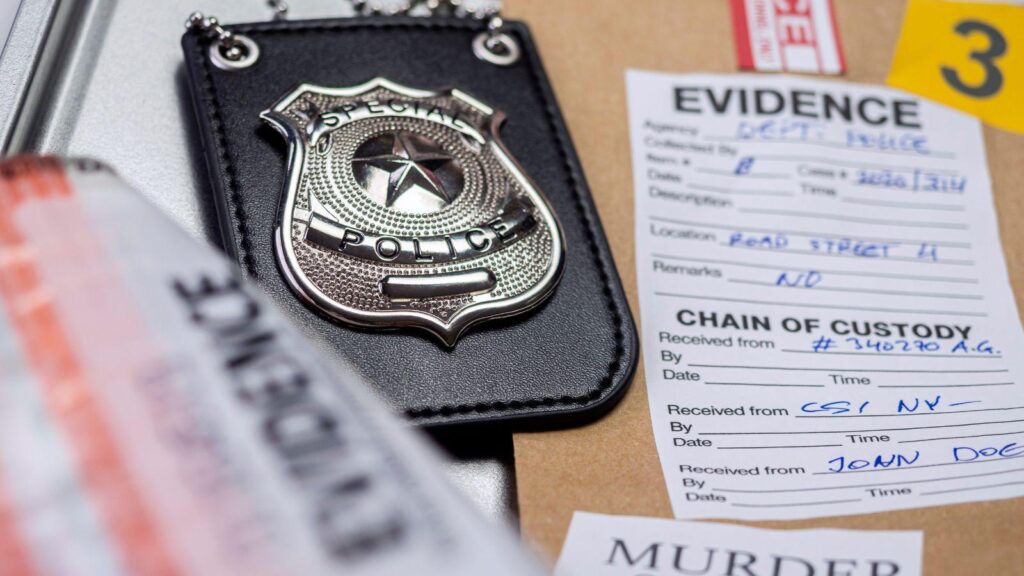
Police work is now documented more thoroughly than ever. Body-worn cameras, dash cams, interview room systems, CCTV integrations, and recorded 911 calls have transformed how incidents are reviewed, investigated, and disclosed. That shift has obvious benefits: stronger evidence, greater accountability, and a clearer record of what happened.
But it has also created a less glamorous challenge that every agency has to confront—what to do with all the sensitive information captured along the way.
A single piece of police footage can contain a victim’s face, a child’s voice, a bystander’s license plate, a medical conversation in the background, and the address of a witness who never expected to be part of the public record. Audio can be even more revealing than video. Names, dates of birth, phone numbers, confidential informant references, and protected health information often surface in seconds.
That is why redaction is not just an administrative step before disclosure. It is a core part of evidence handling in modern policing.
The New Reality of Digital Evidence
A decade ago, redaction might have meant blacking out a line in a report or muting a short section of an interview recording. Today, agencies are dealing with hours of high-definition video and multi-speaker audio, often under tight deadlines driven by discovery rules, public records requests, and internal review.
The scale alone changes the conversation. Redaction is no longer a niche technical task for unusual cases. It is routine operational work.
And unlike paperwork, raw video and audio capture far more than the subject of an investigation. They capture the environment around it. A domestic disturbance recording may reveal children in the home. A traffic stop may include unrelated passengers, medical conditions, or identifying information visible on in-car screens. A jail interview may contain personal details that are relevant to investigators but inappropriate for public release.
That means the question is no longer whether redaction is necessary. The question is whether agencies can do it accurately, consistently, and quickly enough to keep up.
Why Redaction Is Not Optional
Privacy rights do not disappear because a camera was rolling
Police footage often involves people at their most vulnerable: victims of assault, minors, witnesses, patients in crisis, and uninvolved members of the public. Releasing evidence without proper redaction can expose those individuals to embarrassment, retaliation, or real physical danger.
In many jurisdictions, privacy protections are not simply ethical considerations; they are legal obligations. Agencies may need to protect juvenile identities, medical information, undercover officers, confidential sources, and details that could compromise an active investigation. Even when disclosure is required, unrestricted disclosure usually is not.
That makes redaction a balancing act between transparency and protection. The public may have a legitimate interest in seeing how an incident was handled. But that interest does not extend to every face in the frame or every name spoken on tape.
Public trust depends on getting this right
Poor redaction undermines confidence from both directions. Over-redact, and the agency may be accused of hiding information. Under-redact, and it risks exposing protected data and harming the people it is meant to serve.
This is where process matters. Departments increasingly need a secure video redaction platform for law enforcement agencies that fits evidentiary workflows, preserves auditability, and helps staff manage large volumes of footage without introducing unnecessary risk. The goal is not to make records inaccessible. It is to make disclosure safer, more defensible, and more consistent.
When redaction is treated as a disciplined evidence practice rather than a last-minute edit, agencies are in a much stronger position to explain their decisions and stand behind them.
The Hidden Risks of Inadequate Redaction
The obvious risk is accidental disclosure. But the consequences go beyond an embarrassing mistake.
A missed face, an audible address, or an unblurred computer screen can lead to:
These failures are rarely the result of carelessness alone. More often, they stem from workload, inconsistent standards, or tools that were never designed for law enforcement evidence.
A detective or records officer reviewing hours of footage frame by frame is carrying a heavy burden. The task demands concentration, legal judgment, and technical precision. When the volume of requests rises, the chance of human error rises with it.
Audio is often harder than video
Video redaction gets most of the attention because it is visible. Blur a face, mask a plate, obscure a screen—that part is easy to understand. Audio is more complicated.
Voices may overlap. Sensitive information can be spoken quickly or indirectly. Background conversations may reveal names or case details. Dispatch recordings and interviews often contain exactly the kind of personal identifiers that disclosure laws require agencies to protect.
That means effective redaction cannot stop at the image. Agencies need workflows that catch both what is seen and what is heard.
What Strong Redaction Looks Like in Practice
The best redaction practices are rarely flashy. They are structured, repeatable, and built around risk reduction.
Start with policy, not just software
Technology matters, but it should sit on top of clear rules. Agencies should define what must be redacted, who reviews the output, how decisions are documented, and when escalation is required for unusual cases.
A solid redaction process usually includes:
Build for volume and consistency
One-off edits may work for a handful of files. They break down when departments are handling hundreds of hours of footage across public records, prosecution support, and internal affairs.
Consistency becomes especially important when multiple people are involved. If one analyst redacts juvenile faces but another also masks nearby family members, the agency can look arbitrary even if both were acting in good faith. Shared standards and reliable workflows reduce that problem.
Preserve evidentiary integrity
Redaction should protect information without calling the evidence itself into question. That means maintaining a clear distinction between the original file and the redacted release version, preserving metadata where appropriate, and documenting how the edited copy was produced.
In court or during external review, that chain of accountability matters.
Redaction Is Part of Responsible Transparency
There is a persistent misconception that redaction weakens transparency. In practice, the opposite is often true.
Without reliable redaction, agencies may delay disclosure, deny requests more cautiously, or release less than they otherwise could. With it, they can share evidence more confidently while still protecting victims, witnesses, minors, officers, and members of the public.
That is the real value of redaction in police video and audio evidence. It is not about obscuring the truth. It is about making responsible disclosure possible in an era when nearly everything is recorded. For law enforcement, that is no longer optional. It is part of the job.